This post holds hands with A Food Philosophy: Learning, Teaching, Feeding and Eating
Unless noted, I will not include story-telling in my recipes. I would rather share recipes and, separately, write about food.
I do not use measurements. Not only do they not hold true between even English-speaking countries, but they are too prescriptive. How much better to know how to make rice according to your preference than being told one cup of rice to one cup of water, which I do not even like. If a recipe, like a baked good, requires a more scientific exactness of ingredients, I will provide proportions and weights. Though I am not often a western baker. And, even if baked, many sweet rice treats do not need the same exactness.
I will give methods and tricks in a recipe’s “Tips!” section, so as not to assume stupidity or bloat the ingredients with instruction.
Will include pictures for posted recipes.
Following is a “bad” example using rice, then “good” examples using rice and a sauce. (After writing this I realized using rice was a bad example because it is so very important and also second nature to me. But I will keep it and perhaps write about rice again.)
I have disabled comments on this post. If you would like to comment on this reading guide, I ask that you read my philosophy of food and comment there once finished.
One last thing, I do not eat much bread and Italian food is truly my blind spot. Expect mostly East Asian and Pacific Islander recipes that reflect the diversity of Hawai’i (Filipino, Chinese, Japanese, Korean and Hawaiian). Though certainly more.
A messy example, illustrative of my difficulty with recipes:
White Rice
*
Wash** three times
Shake/smooth flat
Add water until reaching your pinky’s first knuckle
Cook*** to make mushy rice
Add water until reaching halfway to your pinky’s first knuckle
Cook to make dry rice
****
———–
*: no amounts included, nor filler instructions such as “pour/measure rice.”
**: I find “until clear” to be overzealous.
***: I know not everyone has a rice cooker, but if I were to have a single appliance…
****: You have to find your own preference between wet and dry, I have my own and so will you. So really, I would say in a recipe: add water to taste.
How posted recipes would actually appear:
Ginger Scallion Sauce
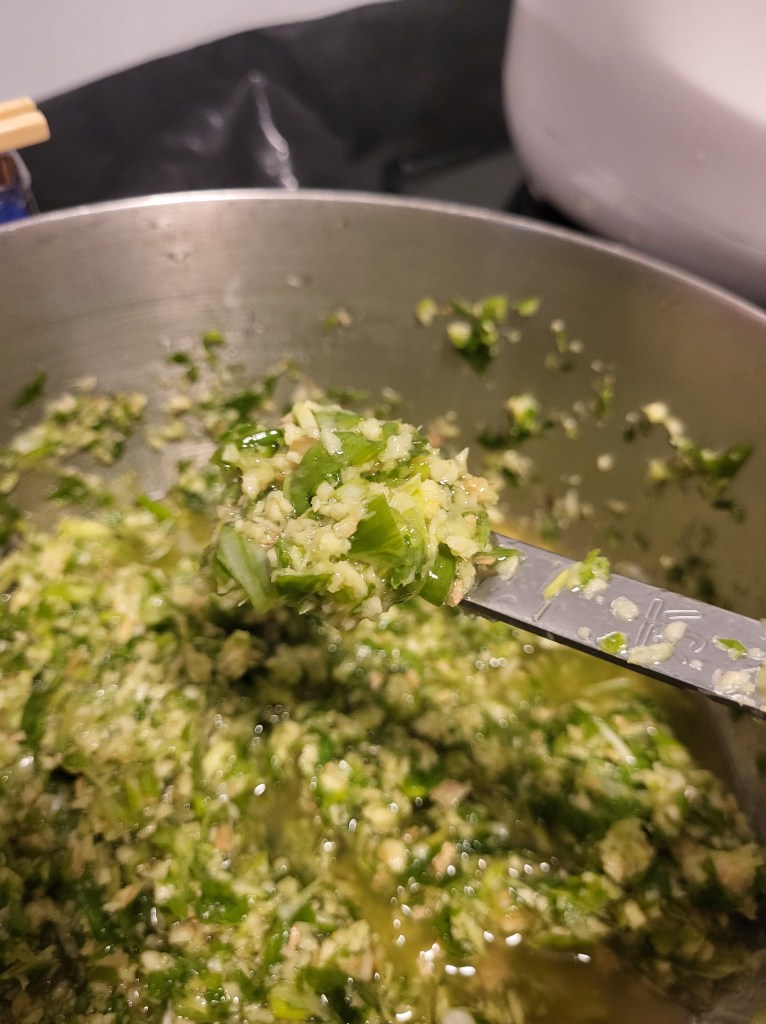
Chopped scallions
Ginger to match volume
Neutral oil to wet
Small amount of fish sauce to flavor
Salt to taste
Tips!
1. Most sauces provide saltiness, but I tend to make this sauce just salty enough to enhance aromatics. This way, it can be added to already salted items.
2. When I am feeling lazy, I do both the scallions and ginger in the food processor. If not, I mince the scallions by hand, but always put the ginger through the machine. This method makes sure that the scallions are not lost in the ginger of the same mince, ensuring you can taste both. It also prevents the oil from turning green, if that matters to you.
3. The fish sauce is really my personal preference for color and taste (the other option being light soy sauce). Do not use enough of either to break the oiliness of the sauce.
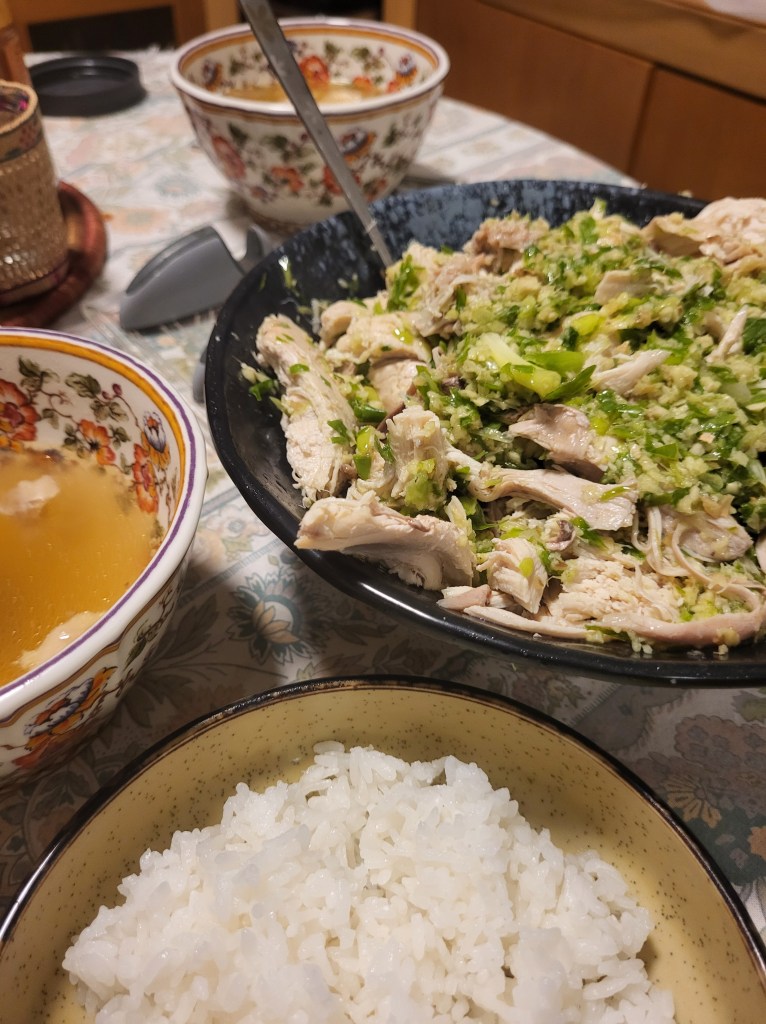
4. When I make chicken stock, I often pull the whole chicken, shred and serve with this sauce, rice and the flavored stock, or other thin soup if saving stock for another use.
White Rice
Wash three times
Shake/smooth flat
Add water to taste
Cook in rice cooker
Tips!
1. If making soup, try using the rice wash water. Traditionally, the second wash is reserved for this purpose, to add depth/thickness and limit waste.
2. If making tea, try using the first wash either as a “tea” in itself, or add tea of choice. I like to add black tea and brown sugar if eating early enough in the day.
3. On washing: what we are doing here is lessening the amount of starch that will obscure the grains of cooked rice.
4. On cooking: if using a pot and stove, add a tiny bit more water than preference in rice cooker and bring to a boil, turn to very low and cover until the water has evaporated. Leave covered to continue steaming. This goes for a rice cooker as well. When the switch flips to keep warm, the rice is not done cooking.
 One of the Formless Daughters